
Find Out Who Owns a Washtenaw County Property
Two county tools do the heavy lifting. The Washtenaw County Parcel Search converts a street address into a parcel ID. It also returns a taxpayer name. The Register of Deeds public index then tests that name against the most recent deed. MapWashtenaw fills in when one address returns several candidate parcels. The county's GIS map also matters when the parcel's shape on the ground matters to the search.
- Search the address and correct municipality in County Parcel Search.
- Record the full parcel number, Taxpayer Name, situs, mailing address, and legal description.
- Search the taxpayer and name variants in the ROD index, then identify the newest conveyance for the same land.
- If an entity appears, verify its filing in Michigan's official business registry; if an estate appears, check probate authority.
- Use only the minimum public details needed for lawful property diligence.
Timing can explain a mismatch. A deed recorded late in the year may be newer than the assessment roll, which updates on an annual cycle. When the two names conflict, study the recorded instrument, its date, and the legal description closely. Bring in a title professional.
Read Washtenaw County's Taxpayer Name Field
One label trips people up. The county's form asks for a Taxpayer Name, while a sample parcel card reads Taxpayer Name 1. Both point to the assessment roll. That field answers who the current tax record lists as owner of the parcel, though it is not a claim about occupancy or clear title.
The parcel card also separates situs from mailing data. A distant mailing address can belong to an absentee owner, an entity, or whoever receives the tax bill. The situs identifies the land itself.
Inspect the Washtenaw County Owner Search Fields
The official County Parcel Search screen lays out its inputs plainly. Address, parcel, taxpayer, and municipality fields identify an owner candidate.
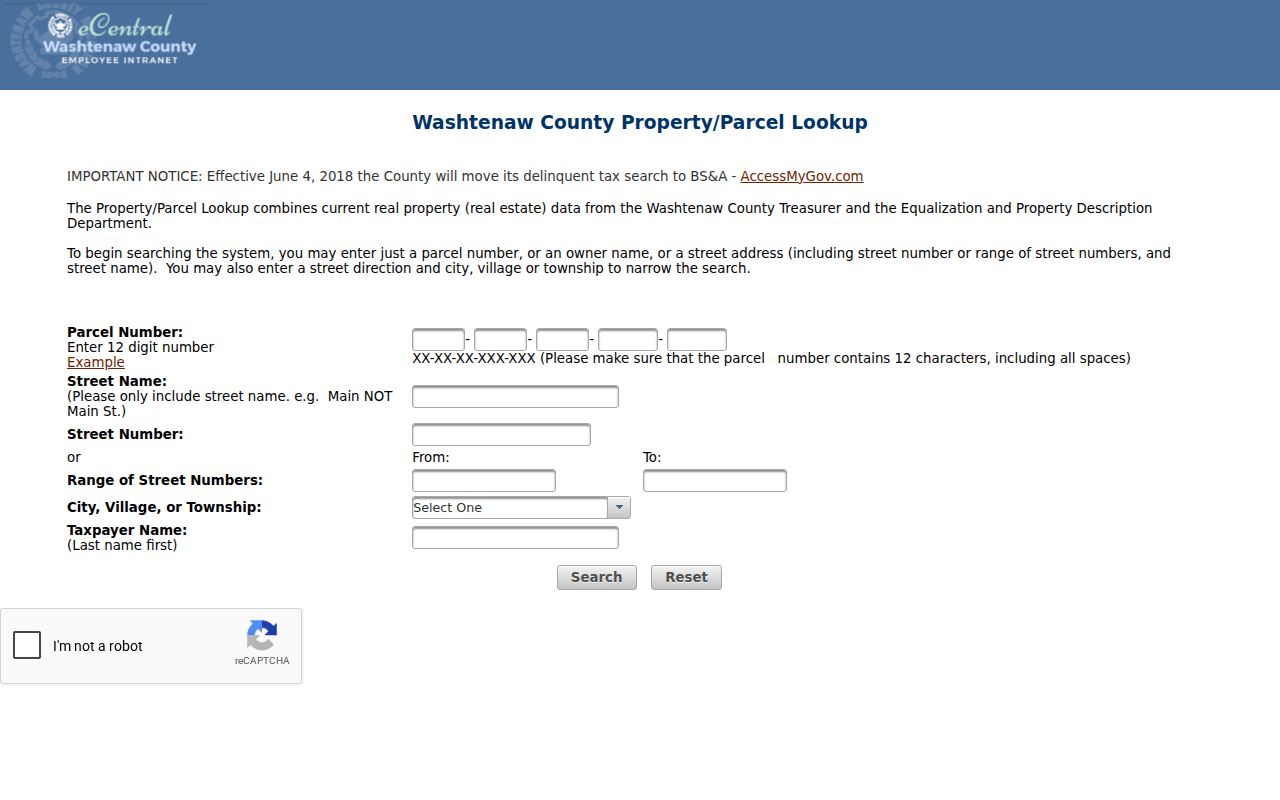
The screen supports both routes. Begin with a location, or begin with a taxpayer name, then hold onto the returned parcel key for the deed confirmation step.
Trace Washtenaw County Ownership to Its Source
No single screen settles every meaning of ownership. The annual tax roll is quick. The latest deed records the conveyance, the GIS map places the land, and a state entity filing explains a company name. Read each source for the job it does.
| Source | Owner Info It Gives | Access |
|---|---|---|
| County Parcel Search | Taxpayer name, mailing and situs data, parcel key | Free county search |
| Register of Deeds index | Grantee and grantor on the newest recorded conveyance | Free index; account needed to buy images |
| Michigan business registry | Entity filing and registered-agent context | Official state search |
| MapWashtenaw | Parcel location and adjoining geography | Free reference viewer |
Ownership and occupancy are not the same thing. The assessor roll is not a resident directory. Its mailing field is not the situs. The trail here identifies the owner of record, not whoever happens to be at the address that day.
Search Washtenaw County Owner Variants Carefully
Names drift across deeds and tax rolls. Search initials, former surnames, spelling variants, trustee capacity, estate wording, and full legal entity names. Check grantor and grantee roles too. Today's taxpayer may hold title under a longer, differently punctuated name than the one on the current roll.
- Owner of record
- The party shown by the relevant official ownership or assessment record.
- Grantee
- The party receiving an interest in a recorded conveyance.
- Vesting
- The way an instrument states that an interest is held, including an entity or trust capacity.
- Situs address
- The location of the parcel, distinct from the address used for tax mail.
Note: A business name can be searched in the Michigan business registry for filing context, though that lookup never substitutes for the deed itself.
Resolve a Recent Washtenaw County Sale
Assessment data moves on an annual cycle. The Register of Deeds records instruments all year. So a fresh grantee can appear in the ROD index before the taxpayer field catches up, and the mismatch gets resolved by comparing the sale or recording date, the deed parties, the parcel reference, and the legal description. Resist solving the gap by trusting whichever screen is easier to read.
For owner detail on this timing gap, the Washtenaw County current owner guide goes deeper. The parcel roll proposes an owner. The newest matching deed tests the proposal.
Interpret Trust, Estate, and Public Ownership
Special owners need extra steps. A trust name usually points to a trustee acting in a recorded capacity. An estate may require a personal representative's deed. It may also need a death-related affidavit, a survivorship record, or the probate file. The transfer is clear only then. An LLC name calls for the state entity search. Remember that a registered agent is not automatically the property owner.
Government bodies show up too. Counties, road authorities, and other agencies can appear as taxpayers. They may hold roads, vacant parcels, or public land. The legal description and the latest conveyance remain the true identity checks.
Line up estate records in order. Take the decedent's last confirmed deed first. Then review the probate case and the representative's authority. Finish with the later transfer. Preserve the trustee wording exactly as recorded. For a public parcel, compare the governmental name with the parcel purpose and the deed. Never confuse a signer, administrator, or tax contact with the grantee.
Monitor New Washtenaw County Deed Filings
Recorded-document watching has a county option. Washtenaw offers Fraud Guard alerts that flag filing activity tied to a watched name. Enrollment helps an owner spot a new instrument, but it does not verify title, block every fraud, or replace reading the document itself.
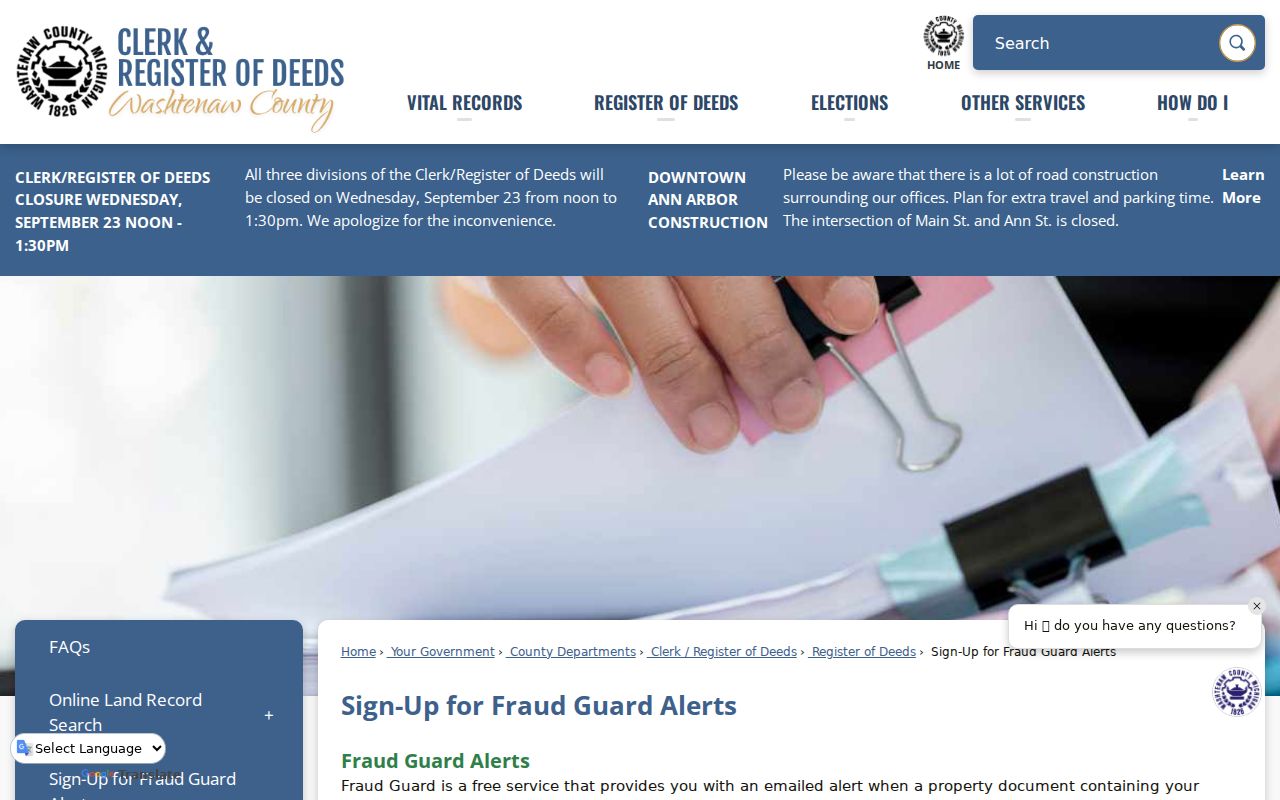
Alerts turn a one-time owner search into ongoing notice of later recorded activity. That is their real value. Confirm any alert with the Register of Deeds before acting on it.
Set Limits on a Washtenaw County Owner Lookup
A taxpayer name alone settles very little. It does not prove who lives there. It does not validate a deed either. Unrecorded claims and stray liens can also slip past a Washtenaw County search, since the parcel portal assesses, the ROD index merely catalogs, and MapWashtenaw stays reference-only GIS. For a high-stakes dispute, a title commitment, legal advice, or a court record may still be required.
Lawful use. Use Washtenaw County owner information for legitimate property research, purchase diligence, estate work, or civic review. Never use it to stalk, harass, intimidate, or harm anyone.
Not every owner name is public. Michigan's Address Confidentiality Program and lawful redactions can shield a sensitive address. Collect only what the property question requires. Keep the source date, and verify the decisive record with its custodian.
A parcel card has hard limits. It cannot resolve an unrecorded interest, interpret ambiguous vesting, or vouch for an indexed document. The ROD index is a catalog. It is not the instrument itself. When purchase funds, an estate distribution, or a contested boundary turns on the answer, obtain the recorded image and call on qualified legal or title help.
Document the method so anyone can reproduce it. Log the address entered, the municipality, the parcel number, the taxpayer label, each ROD name tested, the latest matching instrument date, and the retrieval date. That compact worksheet separates a verified Washtenaw County trail from a name copied out of context.