
Check the Washtenaw County Owner-of-Record Card
Washtenaw County Parcel Search shows the current assessment-roll view of any parcel. The search form labels its name field Taxpayer Name. The parcel card itself says Taxpayer Name 1. Read that label alongside the parcel number and municipality, never alone.
| Taxpayer Name 1 | The name carried on the present assessment record |
|---|---|
| Mailing Address | The destination for tax correspondence, which may differ from the property |
| Situs Address | The physical location attached to the parcel |
| Parcel Number | The 12-character key used across county parcel work |
| Sale Entry | A dated transfer clue that must be checked against the deed |
| Liber/Page | A recorded-document reference when supplied by the parcel card |
An owner of record is not always an occupant. A mailing address can serve as a lawful contact clue for a property matter. It does not prove where someone lives. An Ann Arbor postal address may even belong to a parcel in Scio Township, so keep the municipality the county lists.
Confirm Washtenaw County's Current Owner Against the Deed
The assessment roll proposes an owner, and the newest matching conveyance tests it. When common names, address changes, or multiple holdings muddy the picture, rely on the parcel's exact legal identity to keep the records straight.
- Read Taxpayer Name 1, the parcel ID, municipality, situs, and legal description on the current roll.
- Search that name and spelling variants in the current ROD public index.
- Identify the latest deed affecting the same land and compare its grantee, date, and prior reference.
- Check current official entity or probate context when the grantee is an LLC, trust, or estate.
- Record the retrieval date and any unresolved mismatch.
- Owner of record
- The party shown by the controlling public record for the stated date.
- Assessment roll
- The annual property and tax record, not a title opinion.
- Situs
- The parcel's physical location, distinct from its tax-mail destination.
- Recording lag
- The interval in which a new deed exists but the annual roll still shows an earlier taxpayer.
Measure the Washtenaw County Roll's Timing Gap
The Register of Deeds records instruments all year long. Assessment data, by contrast, follows an annual roll. County guidance warns that year-end changes may not yet appear in parcel data. That lag is why a recent closing can leave two plausible names in official systems at the same time.
Recent sale. The roll can lag a closing. When dates and legal descriptions match, the newest recorded deed is the more current ownership evidence.
Compare the recording date with the tax year and any sale entry. There is no fixed update interval. State the dates you actually observe rather than assuming a delay.
View Washtenaw County's Present Parcel Search
The official parcel portal displays the exact fields used to reach the owner-of-record card.
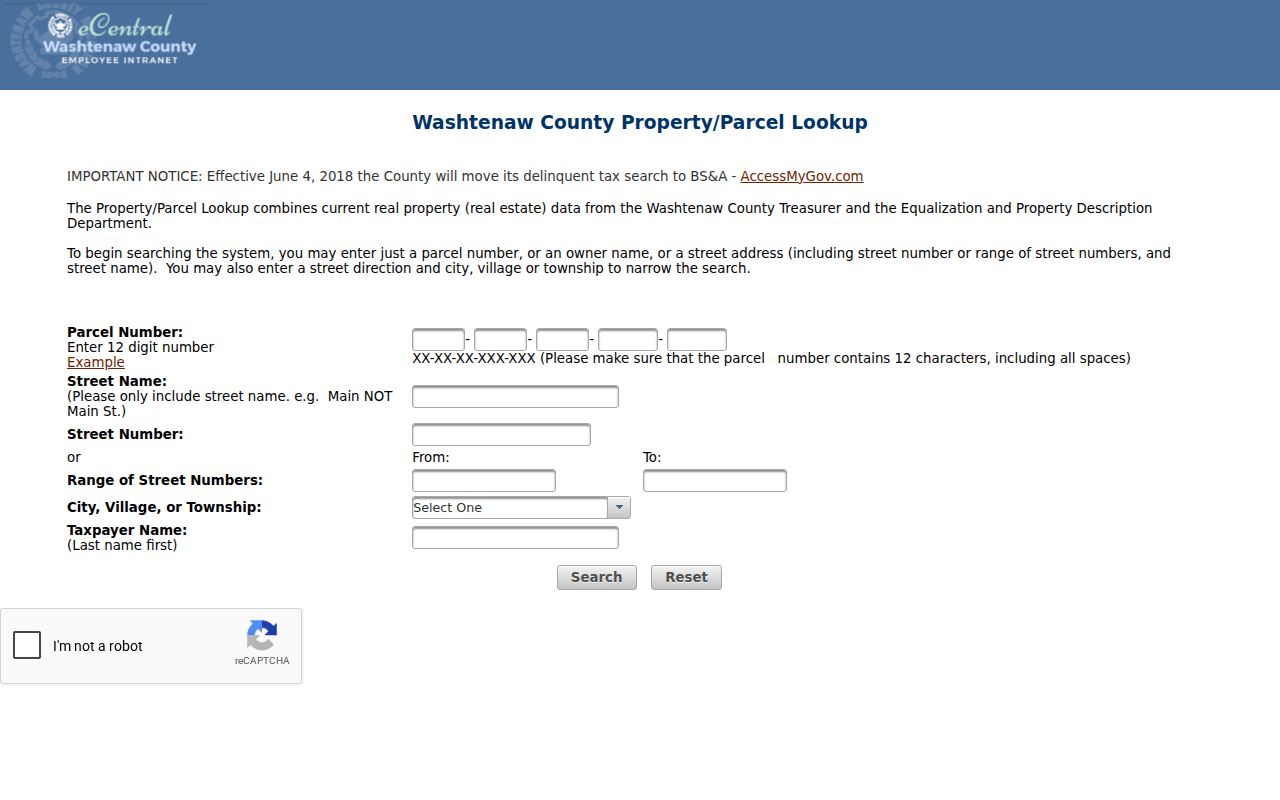
Municipality and parcel-number fields matter as much as the name itself. Together they stop a postal-city label or a duplicate street name from pinning the wrong owner on the land.
Separate Washtenaw County Mailing and Situs Addresses
A tax mailing address tells the county where to send notices. The situs describes the parcel being assessed. The two can differ when an owner does not occupy the property. A trust, an entity, or an absentee owner can also take mail elsewhere. Treating a mailing address as proof of residence is an unsupported conclusion. The distinction also protects search accuracy. Use the situs to confirm the property. Use the parcel ID to move between systems. Use mailing information only when a lawful property matter calls for contact. Note: Collect the least personal detail needed. Retain the source date with any owner-of-record note.
Verify a Current Washtenaw County Entity or Trust
When the taxpayer is an LLC, check the exact entity name in the Michigan MiBusiness Registry Portal. The state filing gives entity context and a registered agent. The agent is not the owner. The deed's grantee language controls the property connection. A trustee acts in a representative capacity, and an estate may rest on a personal representative's deed or probate authority. Compare the full capacity language. Do not shorten the record to one person's name. When a conveyance is unclear, obtain the instrument image or a certified copy. Keep the official roles in separate worksheet columns: taxpayer, deed grantee, trustee or representative, registered agent, and mailing recipient. One person can fill several roles. The record must establish each connection. That discipline keeps a contact person from being reported as the owner of record simply because the name was easy to find.
Use the Current Washtenaw County ROD Portal
The county moved its land-record search from the older ROD login path to ssclerk.ewashtenaw.org. Index searching there costs nothing. Purchasing document images requires an account. The index itself warns that data can change and that spelling variants deserve testing.
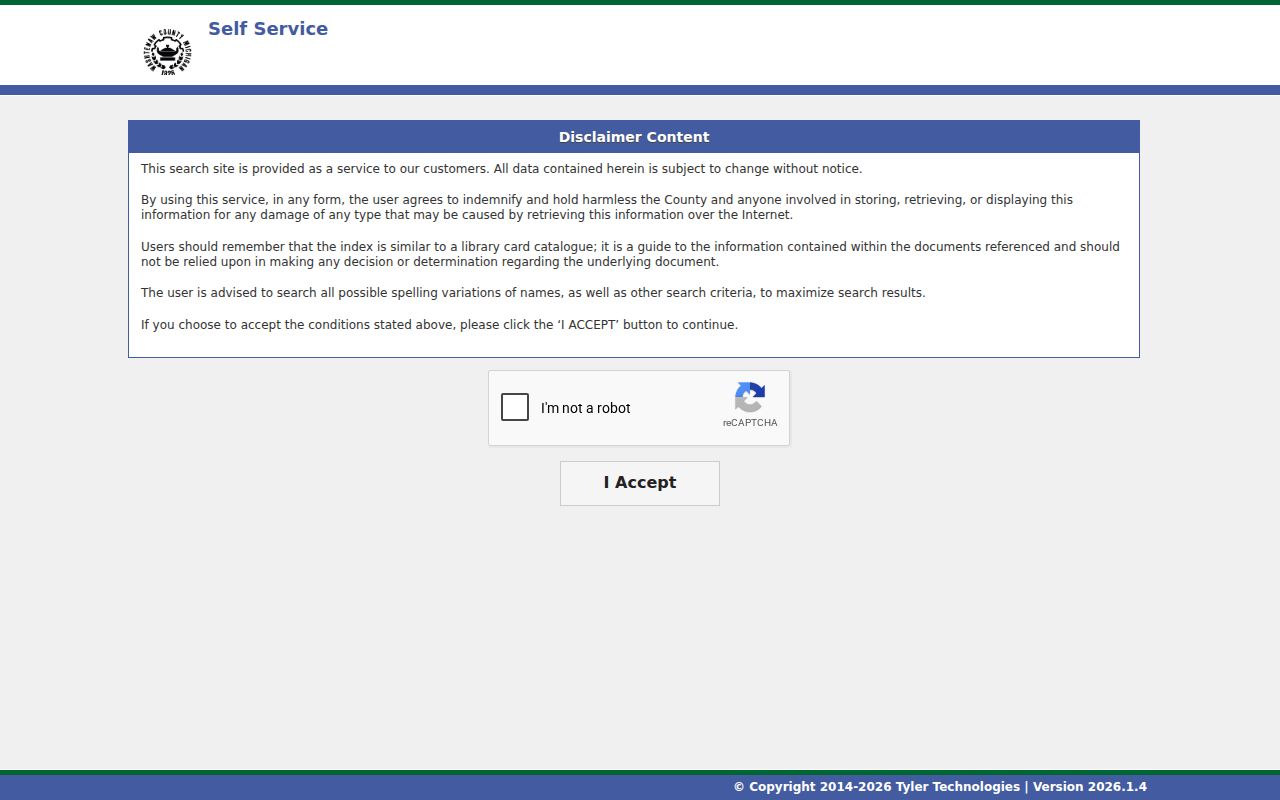
The portal marks the line between free public search and paid image purchase. For owner verification, note the matching index entry first. Then obtain the instrument whenever the parties or the land description need a closer read.
Contact a Washtenaw County Owner Lawfully
The public tax-mail field can support a focused inquiry about a purchase, boundary, easement, or estate matter. It should not grow into a profile of the owner or occupant. Michigan's Address Confidentiality Program and lawful record redactions also limit what may appear.
Lawful use. Contact through public information only for a legitimate property purpose. Never use current-owner records to stalk, harass, intimidate, or harm a person.
A current owner search is not a title search. It does not prove liens, easements, or competing claims absent. Confirm the latest deed with the custodian, and seek qualified help when legal reliance matters. A reproducible owner-of-record note should include the exact parcel ID, municipality, taxpayer field label, situs, roll year, latest matching deed date, grantee wording, instrument reference, and access date. If the roll and the deed differ, state both plainly rather than silently merging them. If no document image was read, say the result rests on index data. After a recent purchase, recheck once the assessment system updates. For a trust or entity, recheck the state filing and the deed capacity. For an estate, retain the probate reference that explains authority. Each follow-up answers the present-tense question without tracing a full backward title chain.