
Understand Washtenaw Deed Types
In Washtenaw County, the Register of Deeds records each instrument affecting land. A deed names the parties. It describes the premises and states the form of transfer, so read it beside its recording date, legal description, signatures, and any prior reference. The document type is only a clue.
| Deed Type | What It Does | Common Use |
|---|---|---|
| Warranty deed | Conveys the stated interest with deed covenants | Ordinary arm's-length transfer |
| Quitclaim deed | Conveys whatever interest the grantor has | Family or title-cleanup transfer |
| Personal representative deed | Conveys through estate authority | Probate administration |
| Sheriff or tax deed | Records a transfer through a statutory process | Foreclosure-related research |
| Trustee deed | Conveys an interest held through a trust | Trust administration |
A mortgage or lien works differently than a deed. It burdens the land without changing title. Releases and discharges may clear those entries years later. Before drawing a conclusion, search every instrument type tied to the parcel and the party names in Washtenaw County deed records.
Open Washtenaw's Current Index
Washtenaw County's land records now live at the current Washtenaw land-record portal. It replaced the older Register of Deeds web address. Index searching is free. Buying document images takes an account. Entries can change, the portal warns. So try surname spelling variants, with and without middle initials. Test trusts, estates, and entity names too.
The portal publishes no confirmed start year for its online index. A blank result does not prove a deed is missing. Write down each name, document type, recording date, and liber/page or instrument reference. Those clues support a copy request or a search of older deed indexes. The current public deed index marks the boundary between free searching and paid image access.
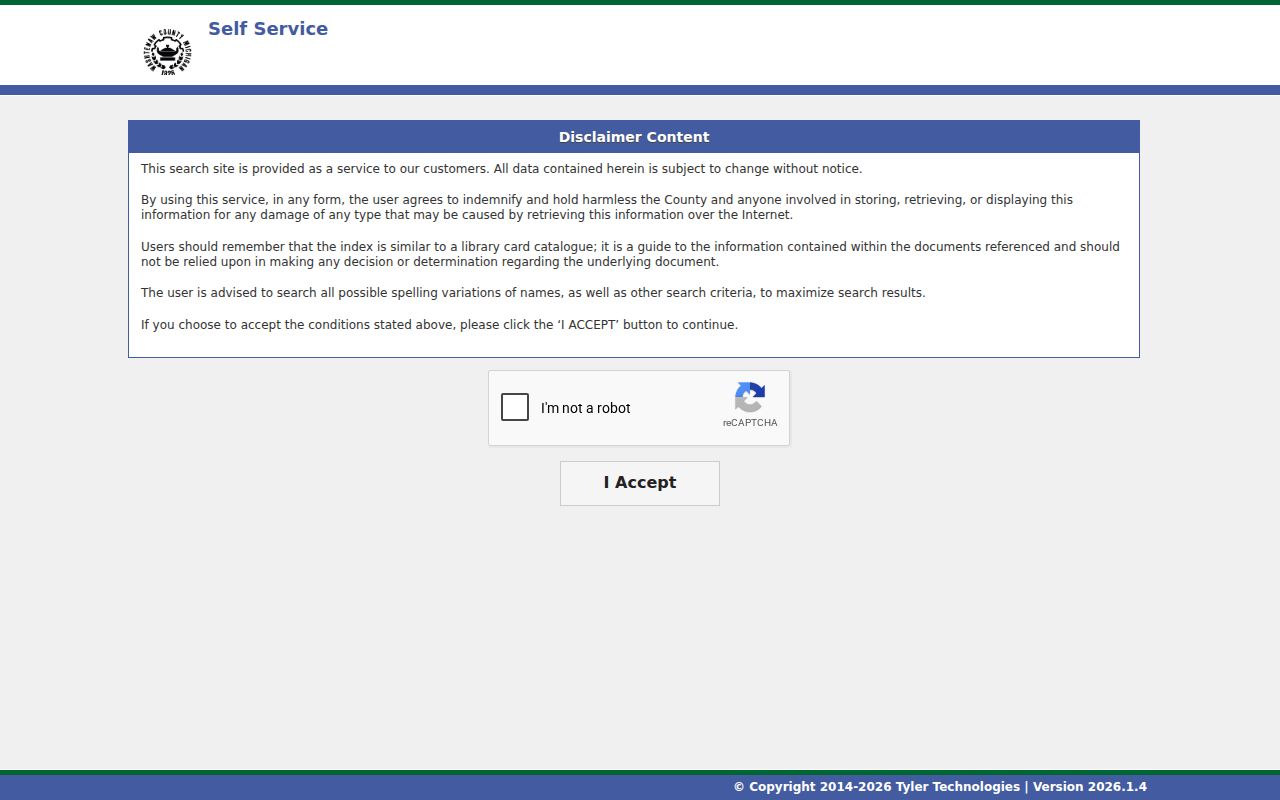
Index access and paid image access are separate steps. The free search stands alone. The Register of Deeds access page then gathers the public search, recording rules, request channels, and the Fraud Guard service in one place.
Read Washtenaw Recording References
A Washtenaw deed may cite a liber and page, an instrument number, or both. "Liber" simply means record book. That reference retrieves the actual instrument. The instrument date and the recording date can differ, so record both when reconstructing a transfer.
A legal description may name a subdivision lot and block, a government section, or a metes-and-bounds tract. Compare that text from deed to deed. Street addresses help a search. They can change, though, and never control the description.
Execution and recording are separate events. A deed can be signed one day and enter the public record much later. When several instruments cluster around one transfer, that gap matters. Treat the consideration statement, return address, drafting party, and tax certificate as clues the image supports. Never infer missing terms from an index label.
Note: Preserve historic terms exactly in a transcription, and add any plain-language explanation separately rather than silently modernizing the deed.
Follow Washtenaw Grantor-Grantee Names
The grantor gives the interest. The grantee receives it. Start from the newest supported transfer and work backward one instrument at a time, matching legal descriptions, parcel clues, dates, and prior references so that people with similar names never merge into one chain. A name alone proves little in Washtenaw County deed records.
- Find the latest deed and verify that its premises match the subject tract.
- Read the grantor's full indexed name and the prior recording reference.
- Search that grantor as an earlier grantee, testing initials and spelling variants.
- Repeat while recording each break, then move to book indexes when the web trail ends.
- Grantor
- The party that conveys the stated interest.
- Grantee
- The party that receives the stated interest.
- Chain of title
- The linked sequence of instruments affecting ownership.
- Liber/page
- A book-and-page locator for a recorded document.
Bridge Washtenaw's Historic Books
The FamilySearch catalog lists Washtenaw deed books from 1801 through 1901. General indexes span 1799 through 1920. The sequence runs from numbered books into lettered volumes. That shift is a useful checkpoint once modern indexing ends. Image access depends on the catalog's current restrictions.
The Bentley Historical Library finding aid covers county records from 1824 through 1946 and notes courthouse transfers in 1955 and 1956. The Archives of Michigan and the Library of Michigan add land, plat, directory, map, and boundary material. An old chain often needs several repositories.
Match Washtenaw Plats to Deeds
A recorded plat supplies subdivision, lot, block, dedication, street, and easement context. When a Washtenaw deed shifts from section land to a named addition, search the plat name and any later replats along with the party names. The state's recorded-plat portal accepts record type, record number, project name, and optional date criteria. Original plats stay with the local Register of Deeds.
Plats can clarify which lot a deed describes. The recorded deed still controls the transaction. So does a later survey on a boundary question. Use the plat as context, not the final word.
Check Recorded Washtenaw Exceptions
A chain review should reach beyond deeds in Washtenaw County. Search mortgages and assignments, releases and discharges, easements, restrictions, construction liens, fixture filings, tax claims, and lis pendens. An old burden may carry a later release. That release can hide under a different party spelling or recording reference.
Historic instruments can hold unlawful restrictive language. Preserve only the recording metadata needed for research. Do not repeat harmful text. Never treat an unlawful restriction as enforceable.
Note: A release must match the burden it clears, because a similar party name or nearby date is not enough.
Watch Washtenaw Deed Activity
Washtenaw County's Fraud Guard alert service can notify an enrolled resident about recorded-document activity. The activity is tied to a monitored name. It is an early-warning tool. It is not title insurance, and it does not guarantee that fraud will be prevented. Check any alert against the actual instrument. A name match alone may involve another person or entity. Reach the recorder through an official channel. Never send money or personal data in response to an unsolicited message that claims to concern a deed.
Request a Washtenaw Deed Copy
Anyone needing a copy of a recorded deed can buy a document image through the portal account. The search and copy instructions also cover a direct request. The official mail form asks for the requester, the names on the document, the document type, the page count, the liber and page, and the number of certified copies. Send mail requests to the Clerk/Register of Deeds at PO Box 8645 in Ann Arbor. Include payment and a self-addressed envelope.
The fee schedule lists a $12 search per name, $1 per copied page, and $5 certification per document. Check the current county fee schedule before sending payment. In-person service is available at 200 North Main Street, Suite 110. Phone help at 734-222-6700 is a fallback when the web index is not enough.
Recorded, not guaranteed. The index reports recorded material. It is not a title opinion, and unrecorded interests or indexing errors may exist.